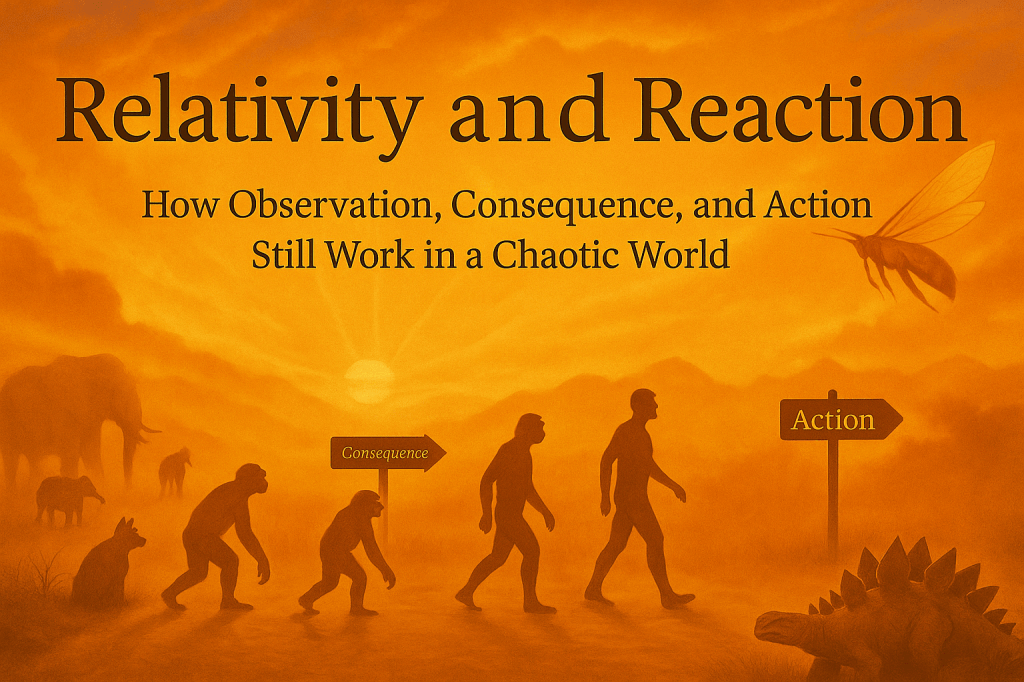
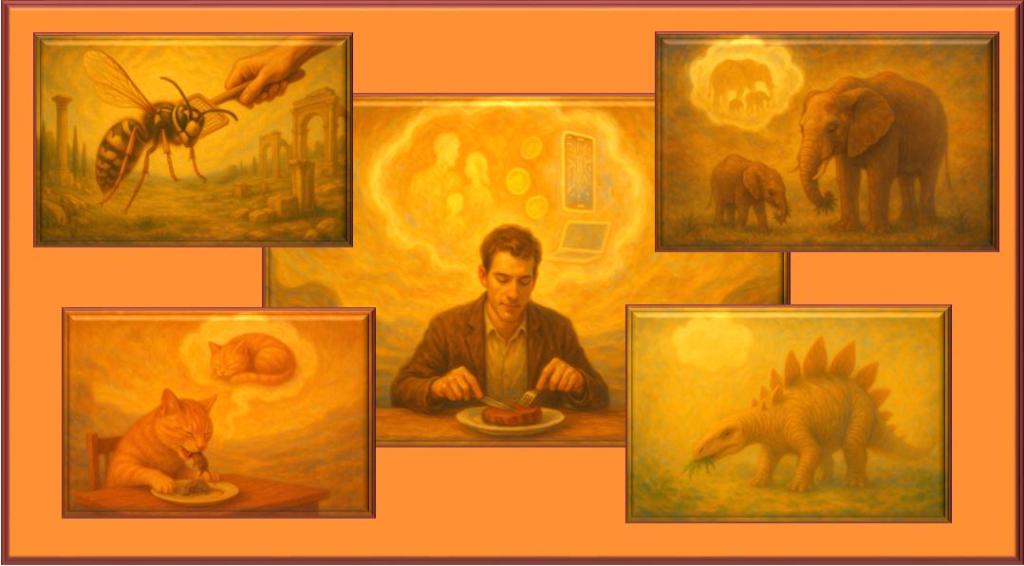
Looking Back in Time
The artwork contrasts how different species engage with the same fundamental act — eating — while reflecting the varying cognitive demands placed on them by evolution. From instinctive consumption to abstract planning and foresight, the image illustrates how food sourcing and survival pressures have influenced the development of attention, memory, and intelligence over time.
Abstract Senses
This artwork explores how Homo sapiens compensate for relatively modest physical senses by developing abstract ones. Through symbolism, numerical reasoning, and shared representations, humans perceive patterns and quantities that lie beyond direct sensory experience — not by superior biology, but by cognitive extension.
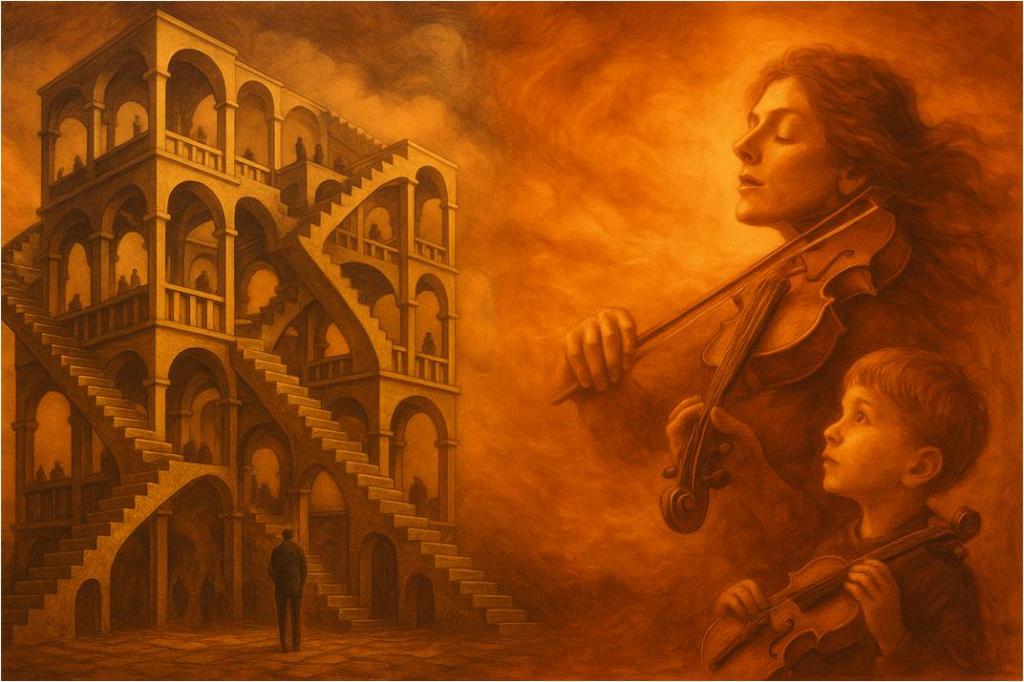
Climbing the Stairs: How Bias Really Works
This artwork represents how humans acquire complex skills through repetition and learning. As tasks become familiar, conscious effort gives way to bias — not as error, but as an efficient shortcut that enables fluent action. The presence of the child highlights how such bias is learned over time rather than innate.
Abstract Feelings and Abstract Senses
This artwork highlights the contrast between the physical limits of the human brain and the vast scope of what it can represent. Within approximately 1350 grams of tissue, humans generate abstract feelings and senses that allow them to model time, space, meaning, and consequence beyond immediate sensory input.

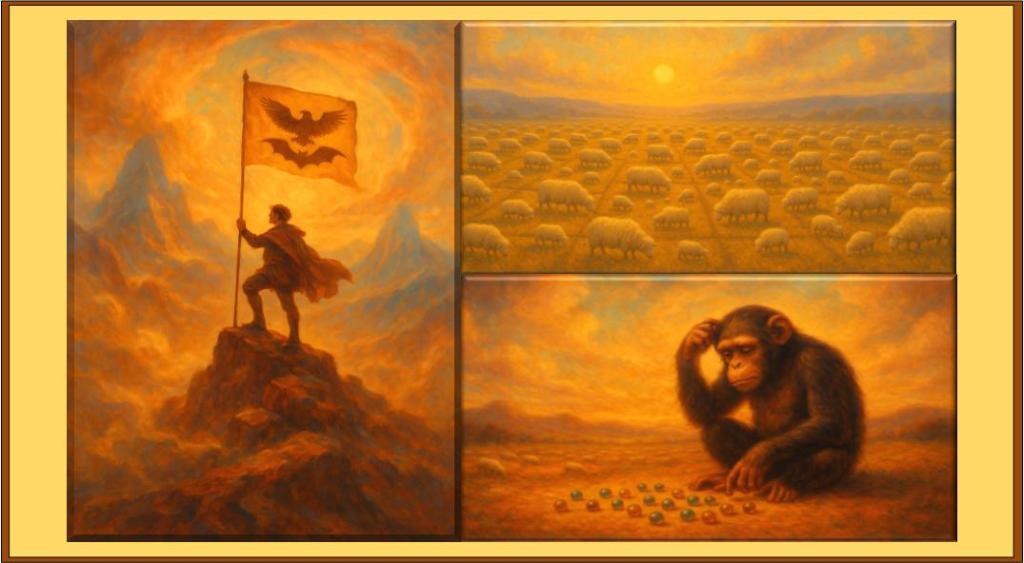
Motivation
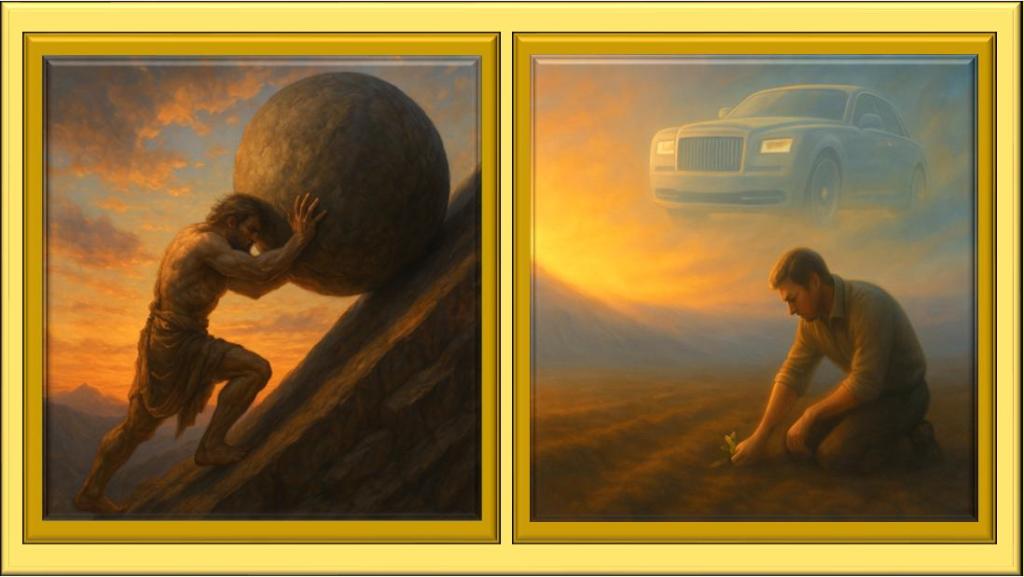
This artwork illustrates how the same expenditure of effort can lead to radically different outcomes depending on intent and direction. Brute force sustains motion, but motivation aligned with a desired consequence allows effort to compound over time rather than repeat endlessly
The Social Knowledge Base
In modern society, the gavel symbolises the ritual and protocol through which laws are enacted and order maintained. It embodies the idea that the pen — words, law, and knowledge — wields greater and more lasting power than the sword.

Potential
Banner image for Exploring Relativity. The artwork depicts a man adjusting a small torch bulb along two parallel wires, recreating a classic slide-wire potential experiment. The glowing idea-bulb above him symbolizes the shift from physical observation to abstract understanding. The image illustrates how both electrical potential and Einstein’s relativity depend on reference frames, mirroring the book’s theme that human abstractions and perspectives shape what we perceive.

The Subliminal Way We Go Through Life
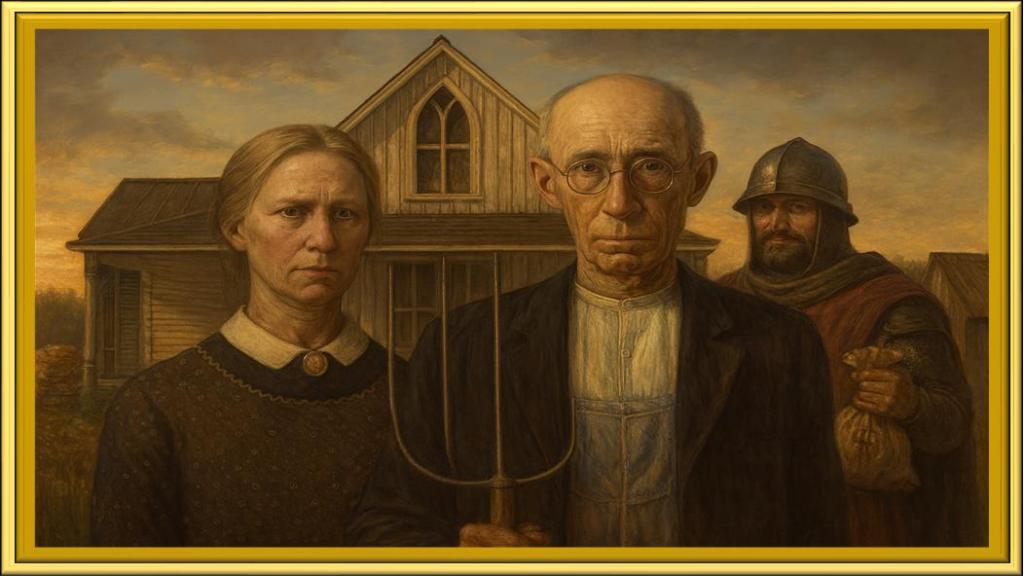
This artwork presents a rural couple — the farmer holding a pitchfork and his wife standing beside him — in front of their wooden farmhouse at sunset. Behind them stands a medieval knight in armour, holding a bag of money. The image reflects the core message of The Subliminal Way We Go Through Life: that ordinary lives are shaped by unseen forces of hierarchy, wealth, and power. The knight symbolises the structures operating behind society’s surface, while the couple represents everyday citizens navigating the world shaped by those systems.
Taking Responsibility
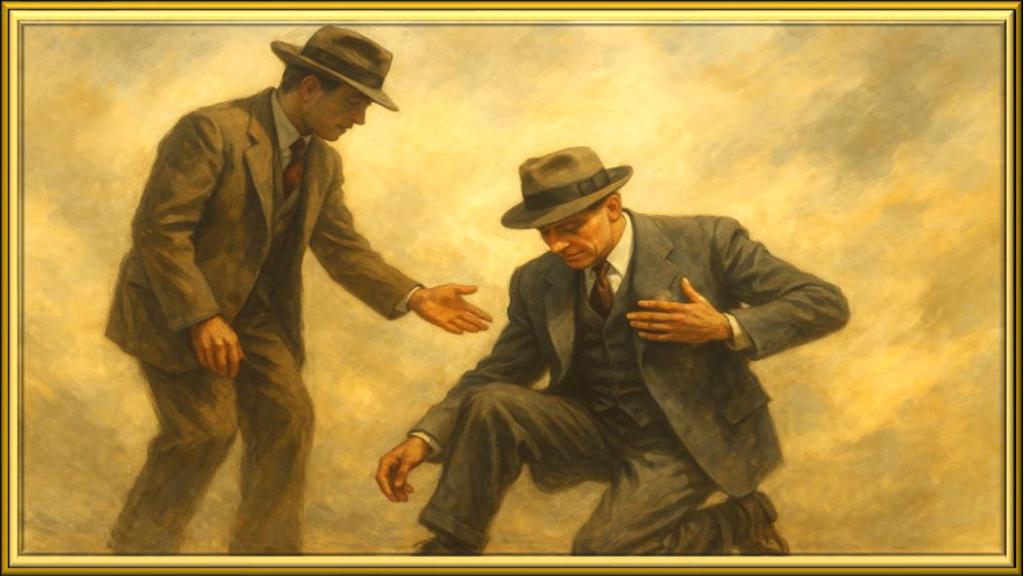
This artwork shows a businessman getting up after a stumble and brushing himself down while another man stops to offer help. It illustrates the core message of taking responsibility: getting up after setbacks, accepting reality, and taking the next step — with help when needed.
Fishing for complements
This artwork shows a fisherman baiting his hook with a “Love It” emoji. It illustrates the core message behind Fishing for Compliments: we often look to others for confirmation and justification, instead of grounding ourselves in purpose and meaning..

Peter and Fermi
This artwork shows an old man prying the last coins from a world-shaped piggy bank. It reflects a recurring pattern in intelligent systems: success drives optimisation, optimisation drives extraction, and extraction continues until the system itself is compromised. In this sense, wealth is not the failure—unchecked optimisation is. A subtle echo of the Fermi Filter, where civilisations may not collapse from malice, but from efficiency carried too far.

 Take a Second Thought
Leave a comment