Take a Second Thought
Take a second thought — because the first one isn’t always enough
Category: Relativity and Reaction (R&R)
-

What does “potential” mean? I was born in the UK and now a citizen of Germany, it made sense to examine how the concept appears in both languages. Both have reputable reference dictionaries. This evolved into an exploration of how meaning shifts across the Social Knowledge Base (SKB).
-
Out of 8 billion humans, only a few hold global power. But everyone exerts influence within their circle of about 150 people—the natural human social limit. We cannot fix the world alone. But we can cultivate reason within our circles—and that’s where real change begins.
-

What distinguishes modern society from its primitive origins is the evolution of the social knowledge base. It is the memory a group carries forward — more than a library of facts. It is a living store of meanings, warnings, and opportunities that allows each person to act beyond their own experience.
-
The Social Knowledge Base (SKB) has many-faces. It adapts to location and context. Many versions of the same “truth” can coexist: Different societies sustain viable but conflicting codices -at its worst, the SKB collapses into mob rule; at its best, it underwrites democracy and a reasonable sense of equality.
-
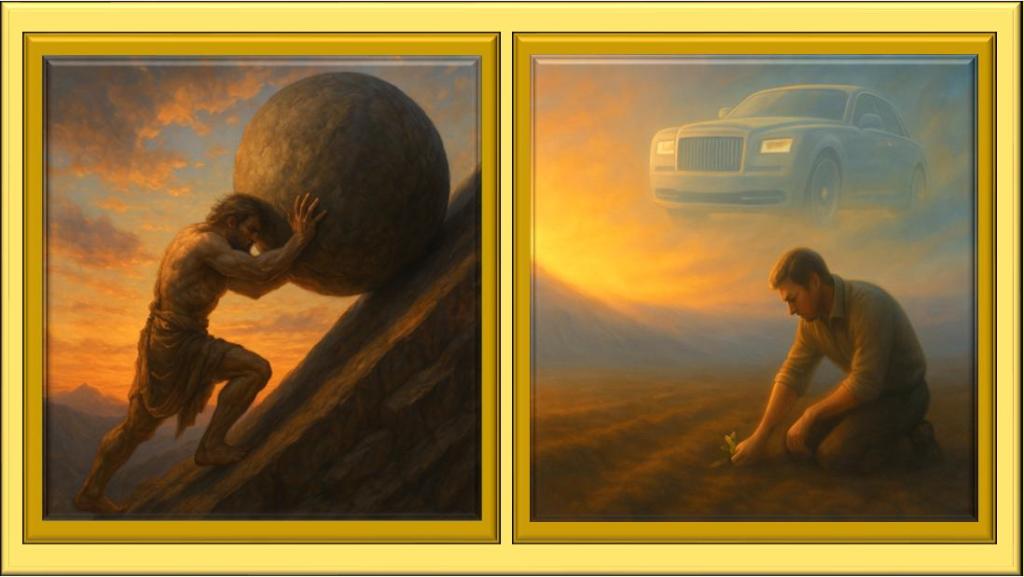
Motivation is the set of emotions and urges that drive behaviour. Their root lies within our opinions and expectations. Self-centred urges or the impulse to harm emerge when our inner values are threatened. The constant reality of life is that such challenges will arise; mastery lies in responding well.
-
Evolution of cooperating groups of animals has left traits that were necessary for survival in the past. They are not the work of the devil. Today they are a problem in modern complex societies. As the dark triad—narcissism, Machiavellianism, and psychopathy—are destructive in modern society.
-
Evolution of cooperating groups of animals has left traits that were necessary for survival in the past. They are not the work of the devil. Today they are a problem in modern complex societies. As the dark triad—narcissism, Machiavellianism, and psychopathy—are destructive in modern society.
-
Unrecognised emotions become moralised behaviours. Internally, they distort perception and decision-making. Externally, they invite regulation, punishment, or shame [3][8]. The feedback loop between what we feel and what society condemns defines much of human conduct.
-
Unrecognised emotions become moralised behaviours. Internally, they distort perception and decision-making. Externally, they invite regulation, punishment, or shame [3][8]. The feedback loop between what we feel and what society condemns defines much of human conduct.
-

Throughout life there is a background noise constantly running in our minds—brain processes idling, vying for attention but without priority. In a state of flow, we concentrate and that noise disappears. The question is: how does a background thought break through and demand full attention? Something must trigger it.
 Take a Second Thought