Category: Relativity and Reaction (R&R)
-

Unrecognised emotions become moralised behaviours. Internally, they distort perception and decision-making. Externally, they invite regulation, punishment, or shame [3][8]. The feedback loop between what we feel and what society condemns defines much of human conduct.
-

Throughout life there is a background noise constantly running in our minds—brain processes idling, vying for attention but without priority. In a state of flow, we concentrate and that noise disappears. The question is: how does a background thought break through and demand full attention? Something must trigger it.
-
The abstract skills and senses exist in the cortex. These senses can alter mood via the limbic system via rapid electrical impulses that result in the release of neurotransmitters and hormones such as dopamine, serotonin, adrenaline, and cortisol. Based on the context the cortex overlays the mood an associated emotion.
-
As we pass through life but especially before the ages 22 to 25, we form our opinions based on our experiences and built on internal models that form our perception of reality. When reality challenges these models, emotions flare.
-
Testing our values systems invoke emotions. If a person’s tolerance is simply a positive bias, then the word bias only describes half the story. The underlying mechanism is not the cause of poor judgement—it can lead to both good and bad outcomes.
-
The abstract skills and senses exist in the cortex. These senses can alter mood via the limbic system via rapid electrical impulses that result in the release of neurotransmitters and hormones such as dopamine, serotonin, adrenaline, and cortisol. Based on the context the cortex overlays the mood an associated emotion.
-
As we pass through life but especially before the ages 22 to 25, we form our opinions based on our experiences and built on internal models that form our perception of reality. When reality challenges these models, emotions flare.
-
Testing our values systems invoke emotions. If a person’s tolerance is simply a positive bias, then the word bias only describes half the story. The underlying mechanism is not the cause of poor judgement—it can lead to both good and bad outcomes.
-
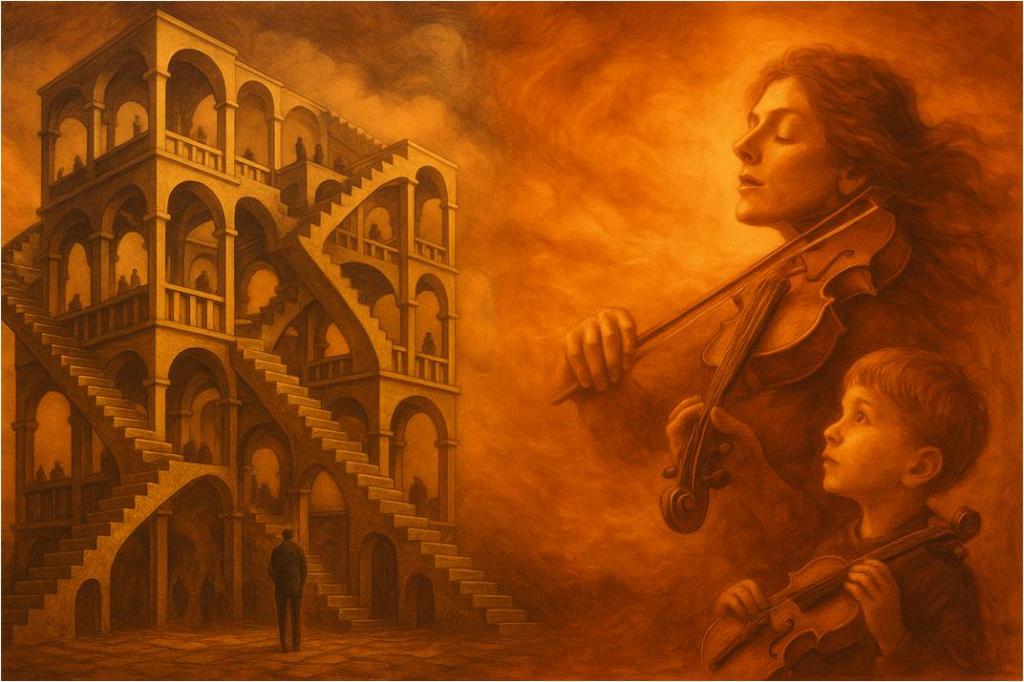
We walk down familiar roads often on mental autopilot. We might notice people – offering a nod or smile. Beneath the surface our subconscious is awake -scanning for danger and opportunity. Like Arnold Schwarzenegger’s Terminator red scan view, locking onto objects, assessing their threat or potential opportunity.
-
Pattern recognition identifies objects by comparing them against similar experiences in memory . In mammals and birds, pattern recognition is especially developed mainly in vision. Optical illusion however reveals the fallibility of human pattern recognition (Gregory, 1997). One payoff is to recognize when to slow down and using deliberate thought

